Rock & Metal Music Scene Evolution in Indonesia
Rock & Metal Music Scene Evolution in Indonesia – The rock & metal music scene evolution in Indonesia is a story of rebellion, resilience, and raw creativity. From underground cassette trading in the 1970s to massive festival stages in Jakarta today, Indonesia has built one of the most passionate rock and metal communities in Southeast Asia. While mainstream pop has always dominated the charts, rock and metal have carved out a loyal and ever-growing audience that continues to shape the country’s alternative music landscape.
Indonesia is often associated with traditional music like gamelan or modern pop idols, but beneath that surface lies a powerful subculture driven by distortion pedals, aggressive vocals, and thunderous drums. The journey of rock and metal in Indonesia is not just about music—it reflects social change, political transitions, and youth expression across generations.
Early Roots of Rock in Indonesia
Rock music began influencing Indonesian youth in the late 1960s and early 1970s, inspired by Western legends such as Led Zeppelin, Deep Purple, and Black Sabbath. Imported vinyl records and radio broadcasts played a huge role in shaping early Indonesian rock bands.
One of the most iconic pioneers of Indonesian rock is God Bless. Formed in the early 1970s, the band became a symbol of Indonesian rock resilience. Their guitarist, Ahmad Albar, emerged as a rock icon, blending local identity with international influences. God Bless proved that Indonesian musicians could match the intensity and stage presence of Western acts while maintaining their own cultural character.
During the New Order era under Suharto, artistic expression faced restrictions. However, rock music survived by adapting. Bands performed at campus events and underground venues, creating a tight-knit community that would later fuel the explosion of metal in the 1990s.
The Rise of Indonesian Metal in the 1990s
The 1990s marked a turning point in the rock & metal music scene evolution in Indonesia. As global metal bands like Metallica and Slayer dominated the international stage, Indonesian youth embraced heavier and more extreme sounds.
The fall of Suharto in 1998 opened new doors for freedom of expression. Underground communities grew rapidly, particularly in cities like Bandung, Jakarta, and Surabaya. One of the most influential metal bands from this era is Burgerkill. Known for their aggressive style and socially conscious lyrics, Burgerkill became a pillar of the Indonesian metal movement and later gained international recognition.
Bandung, often called the “metal city” of Indonesia, became a breeding ground for extreme music. Local studios, independent labels, and DIY merchandise networks strengthened the ecosystem. Instead of relying on major labels, many bands distributed demos independently, building a loyal fan base from the ground up.
Underground Culture and DIY Spirit
What makes the Indonesian rock and metal scene unique is its strong DIY culture. Independent communities organized gigs in small venues, school halls, and open fields. Zines and cassette trading were essential tools for spreading music before the internet era.
This grassroots approach created authenticity. Fans were not just listeners—they were organizers, designers, promoters, and band members themselves. The scene became a family. Even today, that underground spirit remains deeply embedded in the culture.
2000s: Expansion and International Recognition
Entering the 2000s, the Indonesian rock & metal music scene evolution accelerated. Internet access allowed bands to connect with global audiences. Social media platforms made promotion easier, and music streaming helped Indonesian metal reach listeners outside the country.
Bands like Deadsquad pushed technical death metal to new levels. Meanwhile, acts such as Seringai revived classic heavy metal vibes with modern production.
International artists began touring Indonesia more frequently. Major concerts featuring global rock and metal icons proved that the Indonesian market was strong and profitable. Local promoters gained confidence, and large-scale festivals started to emerge.
One of the most important modern bands representing Indonesia globally is Voice of Baceprot. This all-female metal trio has attracted international media attention for breaking stereotypes and representing a new generation of Indonesian metal musicians. Their global tours highlight how far the scene has come since the cassette-trading days.
The Role of Festivals and Community
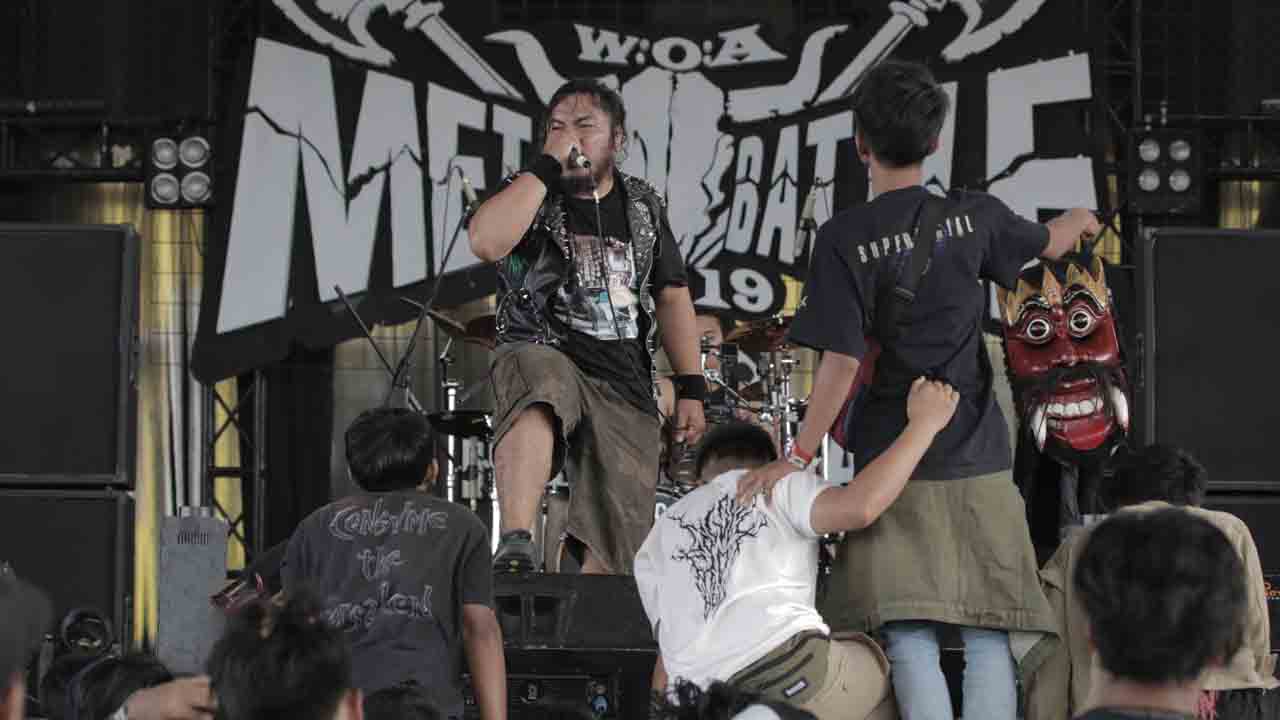
Festivals have played a major role in the rock & metal music scene evolution in Indonesia. Events such as Hammersonic Festival in Jakarta have brought together international and local acts on the same stage, strengthening the ecosystem. These festivals provide exposure, networking opportunities, and validation for local talent.
Community-driven events also remain vital. Smaller regional festivals help maintain the grassroots spirit that defines Indonesian metal. Unlike purely commercial events, these gatherings prioritize connection and authenticity.
Digital Era and Streaming Impact
Streaming platforms have changed how Indonesian rock and metal bands release music. Instead of waiting for label deals, artists now upload singles independently and reach thousands of listeners instantly. Digital marketing, YouTube performances, and social media engagement are now central to a band’s strategy.
However, while technology has modernized the industry, live performances remain the heart of the scene. Indonesian audiences are known for their high energy, intense moshing, and deep loyalty to bands. Concert culture continues to thrive despite global industry changes.
Cultural Identity in Indonesian Rock & Metal
A fascinating aspect of the rock & metal music scene evolution in Indonesia is how bands blend Western influence with local culture. Some groups incorporate traditional instruments, local languages, and social commentary specific to Indonesian society.
Rather than copying Western styles, Indonesian bands reinterpret them. Lyrics often address political issues, corruption, social inequality, and cultural identity. This gives the music a deeper connection to local audiences.
Metal in Indonesia is not merely about aggression. It is also about solidarity, identity, and creative freedom. The scene has survived censorship, economic crises, and shifting music trends because it represents something meaningful for its community.
The Future of Rock & Metal in Indonesia
Looking ahead, the future of the rock & metal music scene evolution in Indonesia appears promising. Younger generations continue to discover classic bands while forming new projects with fresh sounds. Cross-genre experimentation is increasing, blending metal with hardcore, electronic elements, and even traditional Indonesian music.
International collaborations are also expanding. Indonesian musicians now regularly perform overseas, while global artists recognize Indonesia as a key tour destination in Asia. The infrastructure—studios, promoters, independent labels, and digital platforms—has matured significantly compared to previous decades.