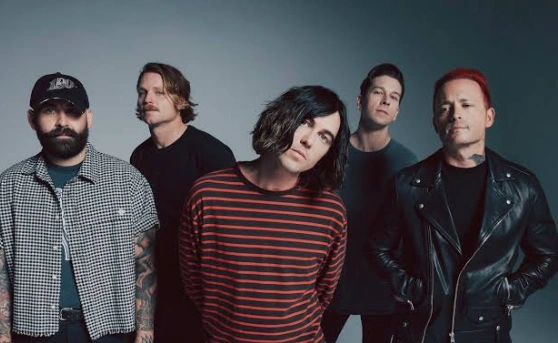
What Makes Sleeping with Sirens So Popular Among Rock Fans?
What Makes Sleeping with Sirens So Popular Among Rock Fans | Sleeping with Sirens has remained a recognizable name in modern rock and post-hardcore for more than a decade. The band has built a loyal international fan base through its combination of emotional songwriting, energetic performances, distinctive vocals, and willingness to evolve.

For many listeners, Sleeping with Sirens is more than simply a rock band. Its music often connects with fans during periods of heartbreak, uncertainty, personal growth, and emotional change.
So, what makes Sleeping with Sirens so popular among rock fans?
The answer lies in a combination of musical identity, emotional connection, memorable performances, and the band’s ability to adapt without completely abandoning its roots.
Who Are Sleeping with Sirens?
Sleeping with Sirens is an American rock band formed in Orlando, Florida, in 2009. The band is particularly associated with the post-hardcore and alternative rock scenes.
The group became widely recognized through releases such as With Ears to See and Eyes to Hear, Let’s Cheers to This, and Feel.
Over the years, the band has experimented with different sounds while maintaining elements that longtime listeners recognize as part of the Sleeping with Sirens identity.
Their music has reached audiences beyond traditional post-hardcore fans, helping the band develop a diverse following.
1. Kellin Quinn’s Distinctive Voice
One of the biggest reasons for Sleeping with Sirens’ popularity is Kellin Quinn’s voice.
His high-pitched vocal style immediately distinguishes the band from many other rock groups.
Quinn can move between softer melodic passages and emotionally intense performances, giving songs a strong dynamic range.
His vocal tone has become one of the band’s most recognizable characteristics.
For fans, hearing a Sleeping with Sirens song can be enough to identify the band within seconds.
2. Emotional Lyrics Connect With Listeners
Another major factor is the emotional nature of the band’s songwriting.
Sleeping with Sirens frequently explores subjects such as:
- Relationships
- Heartbreak
- Loneliness
- Personal struggles
- Self-doubt
- Hope
- Growing older
- Finding strength
These themes are easy for listeners to relate to.
A song can become personally meaningful when its lyrics describe emotions that listeners have experienced themselves.
This emotional connection helps explain why many fans continue listening to the band’s music years after discovering it.
3. The Band Balances Heavy and Melodic Elements
Sleeping with Sirens has never been limited to one musical formula.
Its songs can combine:
- Distorted guitars
- Powerful drums
- Melodic vocals
- Clean guitar passages
- Emotional choruses
- Post-hardcore influences
- Alternative rock elements
- Pop-oriented songwriting
This balance allows the band to appeal to listeners who enjoy heavier rock while also attracting people who prefer accessible melodies.
A song can feel aggressive without becoming inaccessible.
4. Their Choruses Are Easy to Remember
Memorable choruses are an important part of the band’s appeal.
Many Sleeping with Sirens songs feature large, emotional hooks designed to stay in the listener’s mind.
This becomes particularly powerful during live performances.
When thousands of fans sing the same chorus together, the song becomes a shared experience rather than simply a recording.
That connection between recorded music and live performance has helped strengthen the band’s fan community.
5. The Band Has Evolved Over Time
Another reason Sleeping with Sirens has remained relevant is its willingness to change.
Instead of repeating exactly the same sound throughout its career, the band has experimented with different styles and production approaches.
This evolution can be seen across its discography.
Earlier material is strongly connected to post-hardcore, while later releases incorporate broader alternative rock and pop-rock influences.
For some fans, this evolution makes the band’s catalog more interesting because different albums represent different periods of the group’s creative development.
6. They Have a Strong Connection With the Post-Hardcore Scene
Sleeping with Sirens emerged during an important period for post-hardcore and alternative music.
The genre attracted a generation of listeners who wanted music that combined aggressive instrumentation with emotionally direct songwriting.
Sleeping with Sirens became one of the recognizable names within that movement.
The band also shared audiences with groups such as Pierce the Veil, A Day to Remember, and other artists associated with the broader alternative and post-hardcore scene.
This helped create a musical community where fans discovered new bands through tours, festivals, online communities, and recommendations from friends.
7. Their Music Works for Different Moods
A major strength of Sleeping with Sirens is versatility.
Some songs work well when listeners want energetic music.
Others are better suited to quieter moments.
The band’s catalog includes music that can fit moods such as:
- Anger
- Sadness
- Nostalgia
- Motivation
- Romance
- Reflection
- Excitement
This emotional range allows fans to return to the band’s music at different points in their lives.
A song that feels heartbreaking at one age may later feel nostalgic or empowering.
8. Their Live Shows Strengthen the Fan Community
Rock music is not only about recordings.
Live performances can have an enormous influence on how fans perceive a band.
Sleeping with Sirens’ concerts give listeners an opportunity to experience the band’s music collectively.
The combination of loud guitars, energetic drums, Quinn’s vocals, and crowd participation creates an atmosphere that cannot be completely reproduced through headphones.
For longtime fans, concerts can also become important memories associated with particular periods of their lives.
9. The Band’s Music Has Nostalgic Value
For many fans who discovered Sleeping with Sirens during their teenage years or early adulthood, the band’s music is connected to specific memories.
A song may remind someone of:
- High school
- First relationships
- Friendships
- Concerts
- Difficult periods
- Personal milestones
Nostalgia is a powerful reason why listeners return to older albums.
This also helps explain why bands from the 2010s alternative and post-hardcore era continue to have dedicated fan communities.
10. They Can Reach Beyond Hardcore Rock Fans
Although Sleeping with Sirens has strong roots in post-hardcore, its melodic songwriting allows the band to reach listeners outside the genre.
Someone who normally listens to alternative rock or pop-rock may still appreciate the band’s vocal melodies and emotional choruses.
This crossover appeal gives Sleeping with Sirens a broader audience than a band focused exclusively on a single heavy subgenre.
What Makes the Fan Base So Loyal?
Popularity is one thing.
Long-term loyalty is another.
Sleeping with Sirens has maintained a dedicated fan base because listeners often feel emotionally connected to the music.
Fans may not simply like a particular guitar riff or chorus. They may associate the band’s songs with important experiences.
That emotional relationship creates stronger loyalty than casual listening.
The band’s willingness to evolve also gives longtime listeners reasons to continue following new releases while still returning to older favorites.
Sleeping with Sirens’ Musical Identity
The band’s appeal can be summarized through several key characteristics:
| Element | Why It Matters |
|---|---|
| Distinctive vocals | Makes the band immediately recognizable |
| Emotional lyrics | Creates a personal connection |
| Melodic hooks | Makes songs memorable |
| Heavy guitars | Maintains a strong rock identity |
| Musical evolution | Keeps the catalog fresh |
| Live performances | Strengthens the fan experience |
| Nostalgia | Connects music with personal memories |
| Genre crossover | Attracts different types of listeners |
Together, these elements create a musical identity that is difficult to replicate.
Why New Listeners Still Discover Sleeping with Sirens
Even years after the band’s breakthrough, new listeners can still discover its music through streaming platforms, social media, playlists, concerts, and recommendations.
Younger listeners may encounter older songs through online videos or playlists and then explore the band’s wider catalog.
This creates a cycle in which older music continues reaching new audiences.
The emotional themes also remain relevant.
Heartbreak, insecurity, friendship, ambition, and personal growth are not limited to one generation.
Sleeping with Sirens remains popular among rock fans because the band combines a distinctive sound with genuine emotional accessibility.
Kellin Quinn’s recognizable vocals, memorable choruses, emotional lyrics, energetic instrumentation, and willingness to experiment have helped the band establish a lasting identity.
Its connection to the post-hardcore scene also gives the group an important place in the history of modern alternative rock.
But perhaps the biggest reason for the band’s continued popularity is simple: people find their own experiences in the music.
A great rock song can make listeners feel understood, energized, nostalgic, or less alone.
Sleeping with Sirens has consistently created songs capable of doing exactly that.

Comparing Linkin Park’s Vocalists: Chester Bennington and Emily
Comparing Linkin Park’s Vocalists: Chester Bennington and Emily | Linkin Park’s vocal identity has always been one of the band’s greatest strengths. From the explosive combination of Chester Bennington’s emotional singing and Mike Shinoda’s rap delivery to the band’s modern era with Emily Armstrong, the group has continued to evolve while maintaining its distinctive blend of rock, hip-hop, electronics, and alternative influences.

Comparing Linkin Park’s vocalists is not simply a question of deciding who is “better.” Each vocalist brings a different character, technique, and emotional quality to the band’s music. Chester Bennington established the sound that made Linkin Park globally famous, while Emily Armstrong has helped the band enter a new creative chapter.
Chester Bennington: The Voice That Defined an Era
Chester Bennington joined Linkin Park in the late 1990s and became the band’s primary lead vocalist during its breakthrough years. His voice combined melodic singing, powerful screams, vulnerability, and intense emotional expression.
When Hybrid Theory arrived in 2000, Bennington’s vocals immediately became a defining part of the band’s sound. Songs such as “Crawling,” “One Step Closer,” and “In the End” demonstrated how effectively he could move between restrained melodies and explosive vocal performances.
The official Linkin Park biography describes the original lineup as a combination of Bennington’s vocals and Shinoda’s creative contributions, with Hybrid Theory eventually becoming one of the most successful debut albums of the 21st century.
What Made Chester’s Voice Unique?
Chester’s greatest strength was his ability to communicate extreme emotion.
His clean vocals could sound vulnerable and intimate, while his screams could become aggressive and almost explosive. That contrast gave Linkin Park’s songs a dramatic quality.
His vocal style worked particularly well with the band’s lyrical themes. Songs dealing with frustration, insecurity, anger, isolation, and emotional pain benefited from his ability to make the lyrics feel intensely personal.
Rather than treating screaming as simply a heavy-metal technique, Chester used it as another form of emotional expression.
Chester’s Vocal Range and Control
One reason Chester became so influential among rock singers was his ability to move between different vocal registers and textures.
He could deliver:
- Powerful high notes
- Emotional clean vocals
- Gritty melodic passages
- Aggressive screams
- Controlled vocal distortion
- Quiet, vulnerable performances
This versatility allowed Linkin Park to move between genres without losing its identity.
His performance on songs such as “Given Up” became particularly famous for its demanding vocal sections, while tracks such as “Leave Out All the Rest” demonstrated a much softer side of his voice.
Mike Shinoda’s Role as a Vocalist
Although Chester was usually viewed as Linkin Park’s frontman, Mike Shinoda was also essential to the band’s vocal identity.
Shinoda brought a completely different approach through rap, spoken delivery, melodic vocals, and songwriting. His rhythmically precise verses created a contrast with Chester’s powerful singing.
That contrast became one of Linkin Park’s trademarks.
A typical song could move from Shinoda’s controlled rap verse into Chester’s emotional chorus, creating a dramatic change in energy.
Apple Music describes Linkin Park’s early sound as a combination of aggressive rock, hip-hop, and emotional vocals from Bennington and Shinoda.
Why the Chester and Mike Combination Worked
The chemistry between Chester and Mike was more important than either vocalist’s individual technique.
Shinoda’s delivery was generally more rhythmic and restrained. Chester could then enter with a huge melodic or screamed section.
This created a musical conversation between two very different vocal personalities.
For example, the band’s early material frequently used:
Mike Shinoda: rhythmic verses and rap
Chester Bennington: melodic choruses and emotional intensity
Both: layered vocals and harmonies
That structure became one of the most recognizable elements of Linkin Park’s sound.
Emily Armstrong: A New Chapter
After Chester Bennington’s death in 2017, Linkin Park entered a period of uncertainty. The band eventually returned in 2024 with Emily Armstrong as a new co-lead vocalist alongside Mike Shinoda.
Armstrong previously performed with the rock band Dead Sara. Linkin Park’s official biography says that the band’s renewed creative process eventually developed into recording sessions with Armstrong and drummer Colin Brittain, leading to the album From Zero.
Her arrival represented more than simply finding someone to sing Chester’s parts.
It marked a new era for the band.
How Emily Armstrong’s Voice Differs From Chester’s
Emily Armstrong has a powerful rock voice, but she does not sound exactly like Chester—and that is important.
Her delivery can be aggressive, gritty, and emotional, but her tone and phrasing have their own identity.
During Linkin Park’s first major performance with Armstrong in September 2024, the Los Angeles Times noted that she approached classic songs such as “Crawling” and “Given Up” with confidence while reshaping the material around her own voice.
This difference allows the band to perform its classic catalog without presenting Armstrong as a simple replacement or imitation.
Armstrong’s Strengths
Armstrong brings several qualities that fit Linkin Park’s musical style.
Powerful Rock Delivery
Her voice can move from melodic passages to intense rock vocals, giving her the flexibility required by the band’s older material.
Grit and Energy
Her delivery has a raw quality that works particularly well with heavier Linkin Park songs.
Distinct Identity
Rather than attempting to reproduce Chester’s voice exactly, Armstrong brings her own tone and interpretation.
Vocal Chemistry With Mike Shinoda
The combination of Armstrong’s rock vocals and Shinoda’s rap and melodic delivery creates a new version of the vocal contrast that helped define Linkin Park’s original sound.
The Associated Press similarly noted that Armstrong pays respect to the band’s established style without simply imitating Bennington.
Chester vs. Emily: A Vocal Comparison
| Vocal Quality | Chester Bennington | Emily Armstrong |
|---|---|---|
| Vocal identity | Highly distinctive | Distinctive in her own way |
| Clean singing | Emotional and melodic | Strong and expressive |
| Aggressive vocals | Extremely intense | Gritty and powerful |
| Emotional delivery | Vulnerable and dramatic | Raw and energetic |
| Vocal role | Defined the original era | Represents the new era |
| Relationship with Mike | Established classic chemistry | Creates a new dynamic |
| Approach to old songs | Original recordings | New interpretations |
| Overall character | Emotional intensity | Raw rock energy |
The comparison shows why it is difficult to declare one vocalist simply “better.” They serve different moments in Linkin Park’s history.
What About Mark Wakefield?
Before Chester Bennington, Linkin Park’s early history included Mark Wakefield as the band’s vocalist during its Xero era.
Wakefield was part of the group’s formative period before the lineup and musical direction evolved. His role is important historically because it represents the band’s development before Hybrid Theory established the identity most listeners know today.
However, Chester’s arrival dramatically changed the band’s vocal possibilities and helped shape the sound that would eventually reach a worldwide audience.
The Importance of Mike Shinoda Beyond Rap
When discussing Linkin Park’s vocalists, it is easy to focus only on the singers who occupy the center of the stage.
Shinoda deserves special attention because his contribution goes beyond rapping.
He has been deeply involved in Linkin Park’s songwriting and production. His official website lists numerous Linkin Park writing and production credits, including “The Emptiness Machine,” “Lost,” and “Good Things Go.”
His voice therefore functions as part of a broader creative system.
The contrast between Shinoda and the band’s lead singers is one of the reasons Linkin Park can sound instantly recognizable even when its vocal lineup changes.
How From Zero Changes the Comparison
The 2024 album From Zero provides the clearest opportunity to hear the band’s new vocal direction.
Released on November 15, 2024, it became Linkin Park’s first studio album following the death of Bennington and introduced Armstrong as part of the band’s new lineup. The official discography lists From Zero as the group’s eighth studio album.
Songs such as “The Emptiness Machine” demonstrate how Armstrong and Shinoda can work together without simply recreating the exact vocal formula of the early albums.
The result is familiar, but not identical.
That distinction is important.
Should Emily Armstrong Be Compared Directly With Chester?
Fans naturally compare the two vocalists because Armstrong performs songs that Chester originally recorded.
However, a more useful comparison is to examine what each vocalist contributes.
Chester represents the emotional foundation of Linkin Park’s classic era.
Emily represents the band’s willingness to continue creating music while acknowledging its history.
Trying to determine whether Armstrong can “replace” Chester misses the bigger picture. Chester’s contribution cannot be reproduced because his voice, personality, and history with the band were unique.
Armstrong’s role is different: she is helping create a new version of Linkin Park.
Why Chester Bennington Remains Irreplaceable
Chester’s impact on Linkin Park cannot be separated from the band’s most important years.
He recorded seven studio albums with the original lineup, from Hybrid Theory through One More Light, and his voice became closely associated with an entire generation of alternative rock and nu-metal listeners. Linkin Park’s official history notes that the band released seven major albums during that first era before the loss of Bennington in 2017.
His performances continue to define songs that millions of fans know by heart.
For that reason, any new vocalist performing the band’s classic material faces an impossible comparison.
The strongest approach is not to recreate Chester perfectly, but to respect the original performances while allowing a new vocalist to bring something personal to them.
Linkin Park’s Vocal Evolution
Looking at the band’s history reveals a broader pattern.
Mark Wakefield represents the early formative period.
Chester Bennington became the defining lead vocalist of Linkin Park’s classic era.
Mike Shinoda remained a central co-vocalist and creative force throughout the band’s history.
Emily Armstrong represents the band’s current chapter, bringing a different vocal identity to both classic songs and new material.
This evolution demonstrates that Linkin Park has never depended on one vocal technique alone.
Its identity comes from the interaction between voices, production, instrumentation, lyrics, and experimentation.
Comparing Linkin Park’s vocalists is ultimately less about choosing a winner and more about understanding how each voice shaped the band’s evolution.
Chester Bennington had a rare ability to combine vulnerability with explosive power, making his vocals a defining element of Linkin Park’s classic sound.
Mike Shinoda provided the rhythmic and melodic counterbalance that helped make the band’s music distinctive.
Emily Armstrong brings a different energy to the group. Her powerful rock delivery gives the band a way to perform its classic material while also moving forward with new music.
Chester’s legacy remains irreplaceable, but Linkin Park’s current era does not have to erase that legacy. With From Zero, the band has chosen a different path: remembering where it came from while creating something new.
That may be the most interesting part of comparing Linkin Park’s vocalists. The voices have changed, but the band’s willingness to evolve remains.

Last Story From Helena: How a Jakarta Band Built Its Identity Through Music
Last Story From Helena: How a Jakarta Band Built Its Identity Through Music | Music is more than just sound; it is a form of expression that represents emotions, experiences, and identity. In Jakarta, where diverse cultures and creative movements continue to grow, many independent bands have created unique stories through their music. One of them is Last Story From Helena, a band that has built its identity by combining creativity, passion, and personal experiences into their musical journey.

The story of Last Story From Helena reflects how a Jakarta-based band can develop a strong character through consistent creativity and dedication. Their music represents the spirit of young artists who use songs as a way to share feelings, perspectives, and stories with listeners.
The Beginning of Last Story From Helena
Every band starts with a vision, and Last Story From Helena began with the desire to create music that carries emotional meaning. Like many independent music groups, their journey was built through experimentation, collaboration, and a strong connection between the members.
The band’s name itself represents a storytelling concept. It reflects the idea that every song can become a chapter, carrying messages and emotions that connect with audiences.
From their early days, Last Story From Helena focused on developing a musical identity that was different from mainstream sounds. They explored various influences while creating a style that represented their own character.
Building a Unique Musical Identity
Creating a strong identity is one of the biggest challenges for any music group. A band needs more than technical ability; it needs a recognizable personality that makes listeners remember its work.
Last Story From Helena developed its identity through several important elements:
Emotional Storytelling
One of the strongest aspects of their music is the ability to communicate emotions through lyrics and melodies. Their songs often represent personal experiences, relationships, struggles, and reflections.
Music becomes a medium for transforming everyday moments into meaningful stories.
Creative Musical Exploration
A band’s identity grows through exploration. By experimenting with different sounds, arrangements, and influences, musicians can discover their unique direction.
Last Story From Helena demonstrates how creativity helps artists create music that feels personal and authentic.
The Jakarta Music Scene as Inspiration
Jakarta has always been a place where musicians from different backgrounds meet and exchange ideas. The city’s diverse environment provides endless inspiration for creative communities.
The Jakarta music scene offers opportunities for artists to:
- Perform in various venues.
- Connect with other musicians.
- Build loyal audiences.
- Experiment with different musical styles.
For independent bands like Last Story From Helena, Jakarta becomes more than just a location. It becomes part of their artistic journey.
The Role of Passion and Consistency
Building a successful music career requires patience and commitment. Many independent bands face challenges such as limited resources, changing trends, and competition within the industry.
However, passion allows musicians to continue creating despite obstacles.
Important factors behind a band’s growth include:
Continuous Improvement
Musicians must continue developing their skills, songwriting abilities, and performance quality.
Strong Teamwork
A band is built through collaboration. Each member contributes ideas, energy, and creativity to create a shared vision.
Connection With Fans
Listeners play an important role in a band’s journey. Building genuine connections helps create a supportive community around the music.
Music as a Reflection of Personal Experiences
Many memorable songs come from real emotions and experiences. Last Story From Helena represents how personal stories can become universal messages.
Listeners often connect with music because they find parts of their own experiences within the lyrics and melodies.
A song about friendship, loss, hope, or personal growth can create emotional connections between artists and audiences.
This relationship is what makes music powerful.
The Evolution of Independent Bands in Indonesia
The Indonesian music industry has changed significantly with the growth of digital platforms. Independent musicians now have more opportunities to share their work without depending entirely on traditional industry systems.
Modern bands can use:
- Streaming platforms.
- Social media.
- Online communities.
- Digital promotion.
These tools allow artists to reach wider audiences and build their own identity.
For bands like Last Story From Helena, digital development provides new possibilities to introduce their music to more listeners.
The Future of Last Story From Helena
As music continues to evolve, bands must continue adapting while maintaining their authenticity. A strong identity allows artists to remain relevant even as trends change.
The future journey of Last Story From Helena represents the ongoing process of creativity, exploration, and connection with audiences.
Their story shows that success in music is not only measured by popularity but also by the ability to create meaningful work that leaves an impression.
Last Story From Helena’s journey demonstrates how a Jakarta band can build its identity through passion, creativity, and storytelling. Their music represents the experiences of artists who continue creating while staying true to their vision.
In a constantly changing music industry, authenticity remains one of the most valuable elements. Through dedication and artistic expression, Last Story From Helena shows that every band has a unique story waiting to be shared.
Music is not only about listening; it is about connecting, remembering, and creating moments that last.