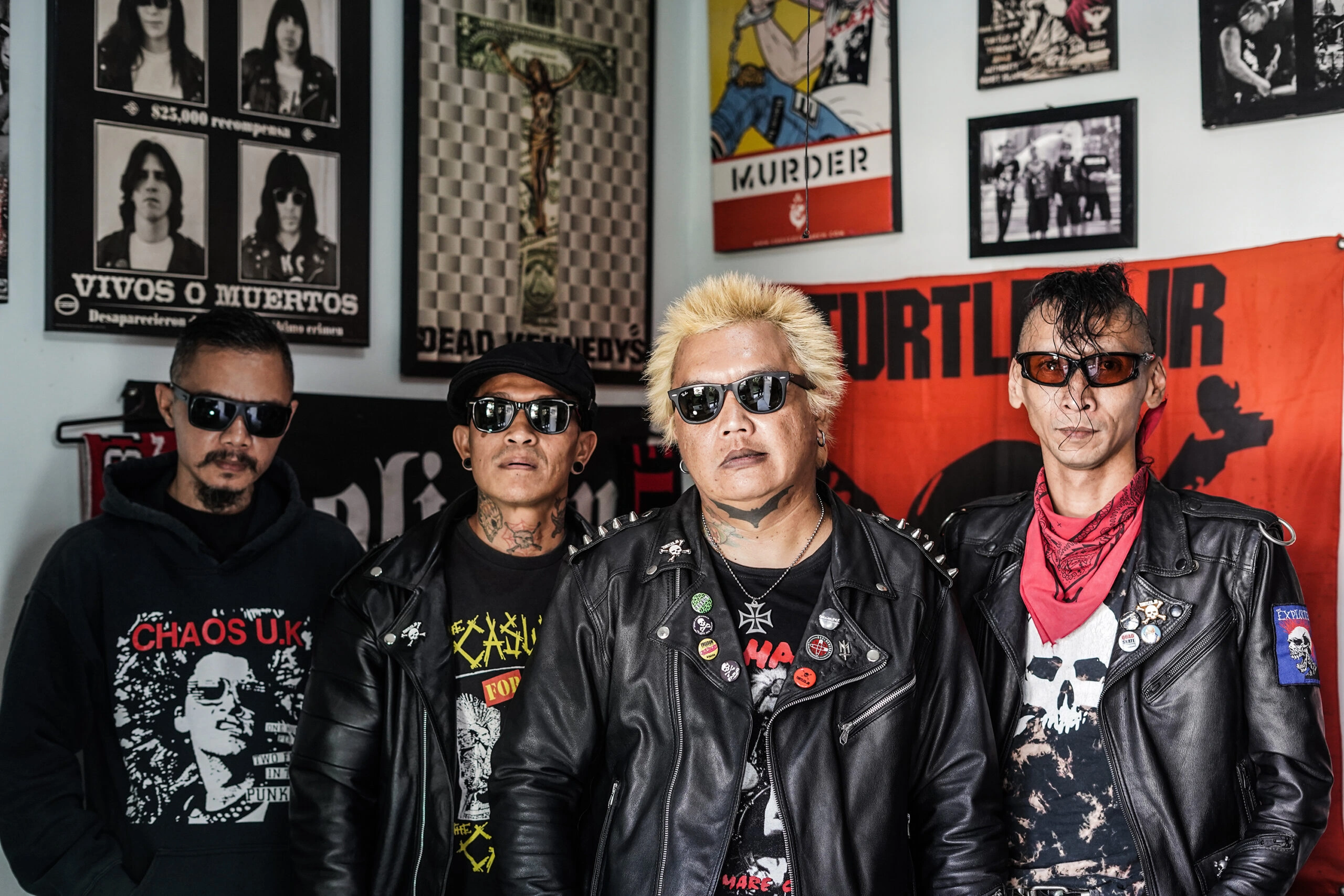
Bandung Death Metal: From Rebellion to Global Stage
Bandung Death Metal: From Rebellion to Global Stage | The global map of extreme music often points toward the northern hemisphere, to places like Tampa, Florida, or Gothenburg, Sweden. However, for anyone diving deep into the Southeast Asian heavy music subculture, there is one coordinates marker that cannot be overlooked: Bandung, West Java. Often dubbed the “Paris of Java,” this city harbors a dark, loud, yet highly organized alter ego. Bandung has long transformed into the ultimate mecca for the domestic death metal movement—an achievement that did not emerge from a vacuum, but was forged in the fires of socio-political rebellion, fierce independence, and deep cultural roots.
The journey of this underground movement began in the late 20th century and continues to thrive today. Intriguingly, what makes the distortion wave in this city so massive is not just the sheer speed and heavy intensity of the music. Beyond the sound, this success is driven by a self-sustaining ecosystem that seamlessly blends revolutionary ideology, tight-knit suburban brotherhood, and a magical marriage between modern extreme music and ancestral heritage.
The Cradle of Rebellion in the New Order Era
Looking back at the 1990s, Indonesia’s socio-political climate was under the iron fist of the authoritarian New Order regime. Freedom of expression was heavily restricted, and spaces for youth to voice social grievances were practically non-existent. It was amidst this repressive political structure that extreme music found its momentum in Bandung. For a collective of young people who felt alienated and voiceless within the macro-system, death metal was far from a mere hobby of listening to high-speed blastbeats and guttural growls. This music was a medium of protest—a collective catharsis for the social injustices they witnessed daily.
The lyrics written during that era were laced with sharp social critiques, anti-fascist stances, and challenges against economic inequality. Attending underground gigs back then carried immense risks—ranging from forced shutdowns by law enforcement to negative profiling by a society that labeled them as moral degenerates. However, this pressure only served as fuel, solidifying the bonds between communities. Extreme music became a universal language for those who refused to bow down to the ruling regime’s singular narrative.
Ujungberung as Ground Zero of the Movement
Discussing Bandung death metal without mentioning Ujungberung is akin to erasing the most crucial chapter of its history. A sub-district located on the eastern outskirts of Bandung, this area became the headquarters where the first wave of the underground movement was born. It was in this suburban fringe, far from the glitz of the city center, that the legendary collective known as Ujungberung Rebel carved its name into history.
Key pioneers like the members of the band Jasad, alongside local musician and music historian Kimung, began laying a rock-solid foundation for the community. Their biggest hurdle at the time was the absolute lack of support from the mainstream music industry. Major record labels refused to look twice at a genre they dismissed as “mindless noise and screaming.”
Instead of throwing in the towel and lamenting their circumstances, the Ujungberung community took the Do It Yourself (DIY) route to heart. They built a fully self-reliant mini-ecosystem:
-
Musicians taught each other instrument techniques self-taught style.
-
Musical gear and rehearsal studios were shared communally without rigid commercial calculations.
-
Gig promotions were done entirely word-of-mouth using photocopied flyers distributed via guerrilla tactics.
-
Album production was funded independently, from recording and duplicating cassette tapes to distribution through friendship networks.
These tactical moves proved that a subculture could survive, and even flourish, without begging for space from corporate-backed industries.
The Marriage of Modern Distortion and Mystical Sundanese Tradition
One defining factor that has earned the Bandung death metal scene international recognition and a highly distinctive character is its capacity for cultural hybridization. The scene did not blindly imitate Western extreme music influences. Instead, they absorbed the global sonic aesthetics and intimately married them with their local heritage: Sundanese culture.
Bands like Jasad pioneered this cultural movement. They did not just employ the Sundanese language in their lyrics; they also integrated traditional instruments such as the karinding (bamboo jaw harp), celempung, and suling (bamboo flute) into an arrangement already heavy with down-tuned distortion and blastbeats. Furthermore, ancient Sundanese philosophies were deeply embedded into their album concepts.
This phenomenon is also evident in how the Bandung metal community draws energy from Seni Reak—a traditional Sundanese trance performance featuring spirit possession, repetitive yet rhythmic drum beats, and barong dances. The intense, noisy, and spiritually charged nature of Seni Reak was felt to share the exact same spiritual frequency as the chaotic energy inside a metal mosh pit. This convergence birthed a highly authentic identity. Extreme music in Bandung ceased to be a carbon copy of Western imports; it transformed into a contemporary expression of ancestral spirituality and localized cultural heritage passed down through generations.
Building a Independent Infrastructure Through Bandung Berisik
As time marched on, the number of extreme music devotees in Bandung exploded exponentially. Small-scale gigs in old warehouses or campus halls could no longer accommodate the thousands of metalheads hungry for distortion. The desperate need for larger venues triggered the birth of one of the most legendary extreme music festivals in Southeast Asia: Bandung Berisik (Bandung Noisy).
Initiated by the Ujungberung Rebel collective, the festival originally featured humble stages and rudimentary sound systems. Yet, the unyielding dedication of the fans and consistent management saw the festival evolve into a massive celebration. Bandung Berisik successfully migrated the masses from dark, underground spaces into sprawling sports stadiums.
The festival’s success sent a clear message to the national entertainment industry: extreme music holds massive economic value and commands an incredibly loyal fanbase. Through this festival, the standards for event management, sound engineering, and crowd safety for heavy music concerts in Indonesia underwent a significant upgrade.
Tragedy, Resilience, and Conquest on the Global Stage
Maintaining the title of the capital of extreme music has not been without its dark days. The scene hit its absolute nadir when a human tragedy struck in 2008. During a record release show for the band Beside at the AACC building in Bandung, overcrowding led to a fatal crowd crush, resulting in casualties due to suffocation and trampling. This devastating event left deep scars and prompted strict concert permit lockdowns by authorities for years.
While the tragedy temporarily paralyzed the city’s live music circuit, it failed to crush the spirit of the community. This dark moment was instead treated as a turning point for total evaluation. The Bandung metal community moved swiftly to overhaul their internal regulations. They redefined event management systems, tightened crowd safety protocols, and began collaborating professionally with medical and security personnel. This mental resilience proved that the underground community possessed the maturity to learn from catastrophic mistakes.
Emerging from those trying times, validation came knocking from the international stage. Heavyweight names like Burgerkill stood at the vanguard, carrying the Indonesian metal flag to global heights. Their triumphs in securing international music awards and performing at legendary European metal festivals—such as Wacken Open Air in Germany and Bloodstock Open Air in the UK—offered undeniable proof of the musical caliber brewing in Bandung. This giant leap paved the way for a new generation, including bands like Voice of Baceprot (VOB), further cementing Bandung’s position on the global music map.
A Living Cultural Legacy
Today, Bandung’s status as a holy ground for death metal enthusiasts is beyond dispute. What began as a mere hangout spot for disenfranchised youth in a corner of Ujungberung has transformed into a living, breathing contemporary cultural legacy that continues to regenerate.
The unique combination of political self-reliance, an emotional anchor to ancestral traditions, and robust community management makes this scene a prime blueprint of how a subculture can grow into an independent collective force. Bandung is not just a breeding ground for bands playing fast, loud music; the city stands as a living monument proving that music can serve as a unifying tool, a guardian of identity, and a force that changes the trajectory of a generation.